
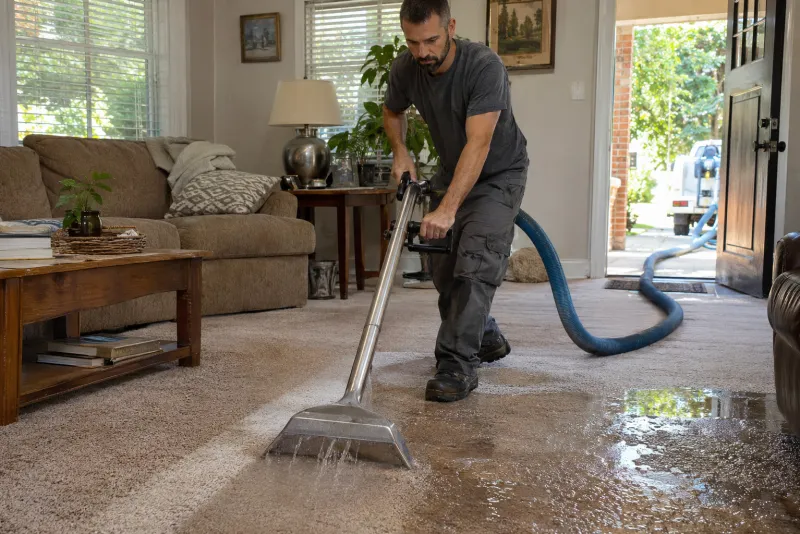
Emergency Water Extraction
Standing water removed before it reaches drywall, baseboards and stored belongings.
Get help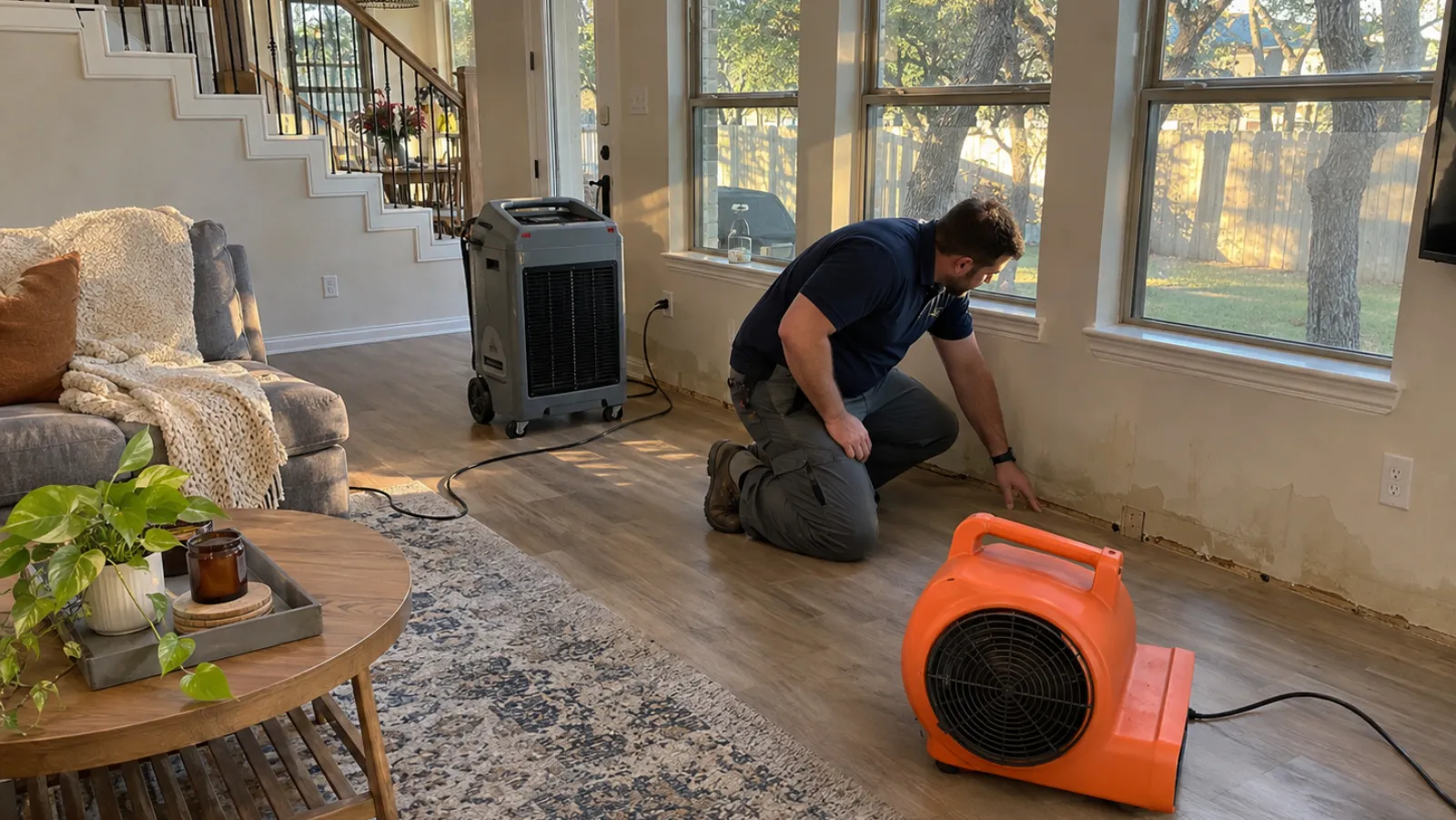
Standing water, a slab leak or a pipe that split overnight does not wait for business hours. We answer 24/7, classify the water, extract it, dry the structure and document the loss for your insurance claim.
Call (512) 555-0143 Or see how to reach dispatch. Calls are answered 24/7.Cedar Park sits on the north edge of the Austin metro, where US 183, the 183A Toll and RM 1431 connect established neighborhoods with fast-growing development. Twin Creeks on the Travis County side, Buttercup Creek west of Bell Boulevard, Riviera and the Ranchettes along Block House Creek all have their own building ages, drainage paths and access needs. Water losses here often follow weather and construction: hail opens a roof, Hill Country rain drives water toward a slab, and a failed attic or appliance line sends water through finished rooms.
We serve Anderson Mill West, Forest Oaks, Ranch at Brushy Creek, Cedar Park Town Center, Cypress Creek, Cypress Canyon, Carriage Hills, Vista Ridge, Lakeline, Avery Ranch on the Cedar Park side and Ranch at Deer Creek. The process runs from emergency extraction through structural drying, contamination cleanup, mold remediation and repairs. It starts with moisture mapping and thermal imaging because water can move under flooring, behind baseboards and through an attic before the visible stain tells the full story.
Cedar Park sits in a region often called Flash Flood Alley, so creek and stormwater around Brushy Creek or Buttercup Creek is treated as contaminated until assessed. If water is still moving, shut the main valve if it is safe, turn off breakers serving wet rooms, lift contents above the floor and photograph the damage. A dry-looking ceiling can still hold wet insulation, and a warm area on a slab can point to a leak running below the flooring.
One crew from the first extraction through the final repair. No handoff to a separate company halfway through the job.
Standing water removed before it reaches drywall, baseboards and stored belongings.
Get help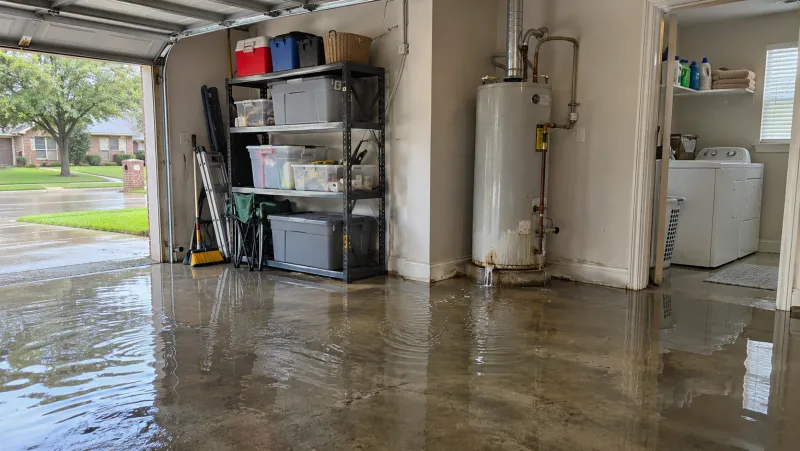
Leaks below the slab, wet wall bottoms and runoff collecting near a foundation.
Get help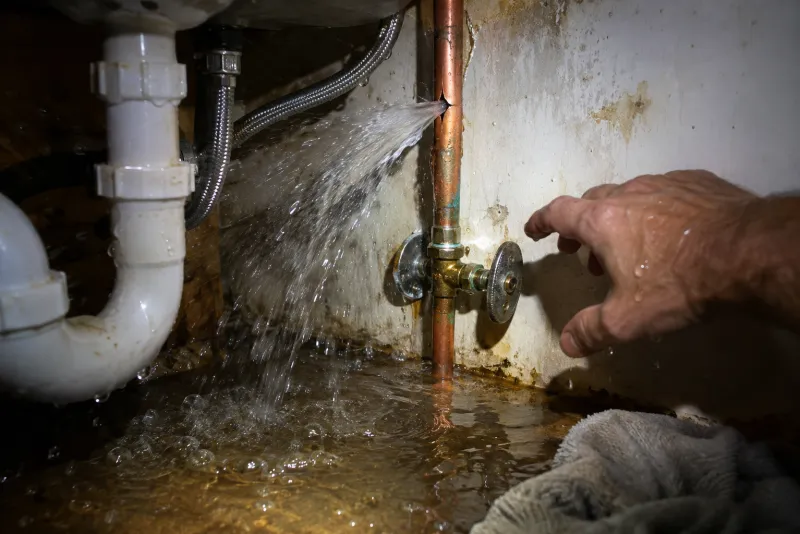
Freeze-damaged pipes, attic line breaks and ceiling stains traced to the source.
Get help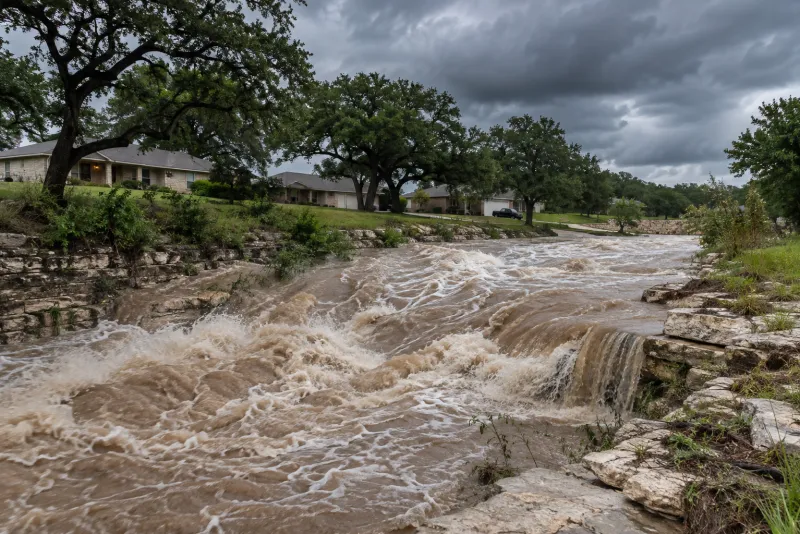
Wind-driven rain, hail-damaged roofs and ceiling leaks after a Hill Country storm.
Get help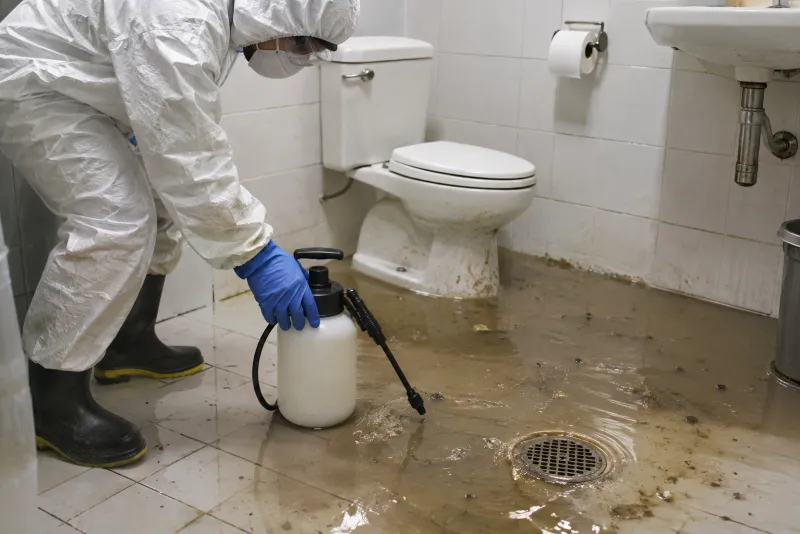
Contaminated water handled with containment, PPE and appropriate disinfection.
Get help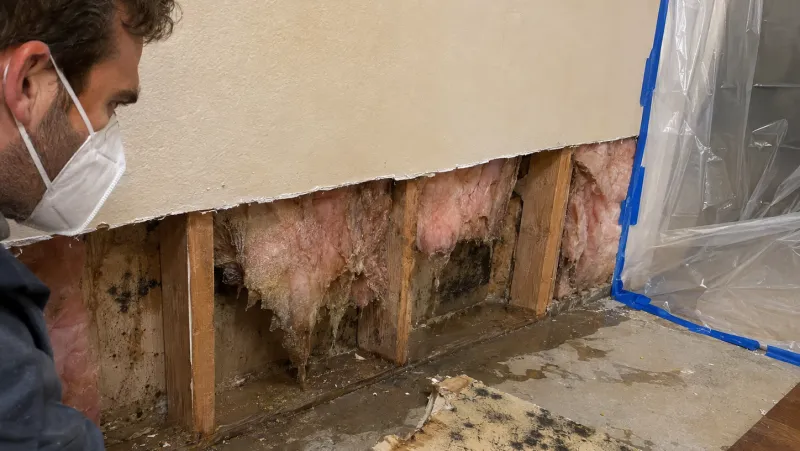
Containment, HEPA filtration and repairs after the structure is dry.
Get help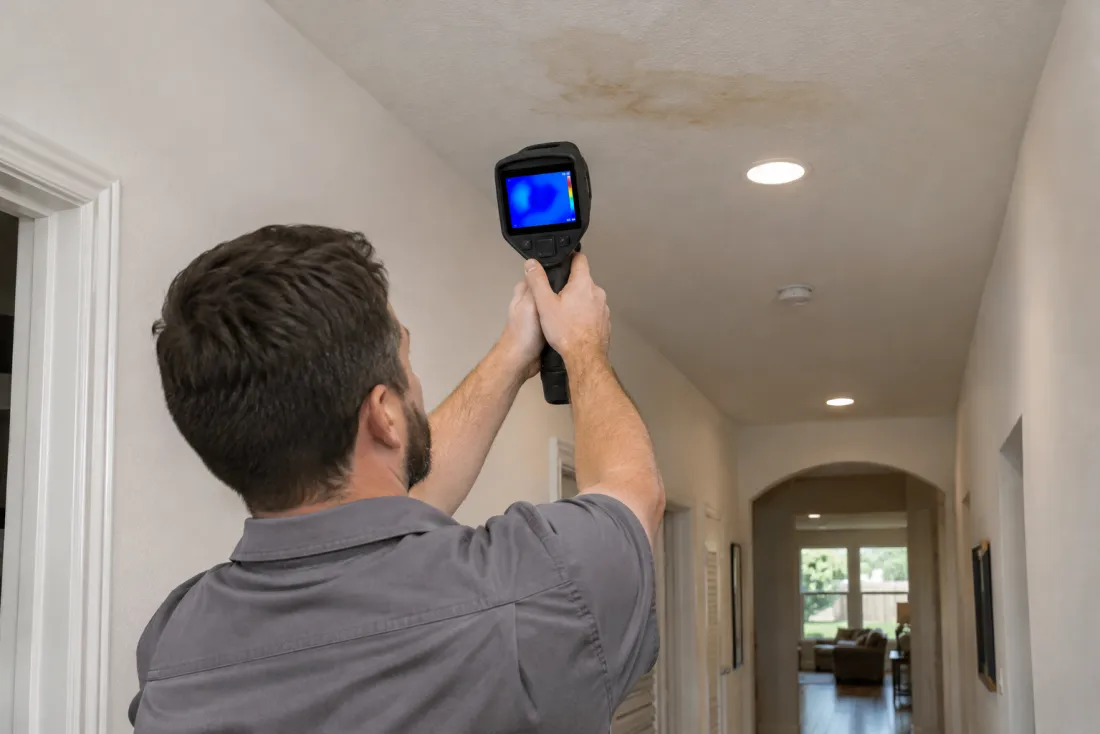
The first visit is an inspection, not a sales pitch. We identify the source and water category, map moisture with meters and thermal imaging, and explain what needs to happen before materials are removed.
We ask what is wet, when it started and whether the water is clean, gray or black. You get immediate shut-off and electrical-safety guidance.
Meters and thermal imaging show how far water travelled. We photograph affected materials and record readings room by room for you and your adjuster.
Standing water comes out first. Saturated carpet, pad and material that cannot dry in place are removed, with controlled demolition or flood cuts used only where needed.
Applied structural drying uses air movers and dehumidifiers sized to the space. Daily moisture readings continue until materials are verified dry.
After cleaning, antimicrobial treatment where appropriate and drying, drywall, trim, flooring and paint are scoped for reconstruction. You get a finished room, not an open ceiling.
Water hides in cavities, under flooring and behind finished walls. These are the clues that usually mean a moisture map is needed.
Describe what you see. We will tell you whether it can wait for a scheduled visit or needs a crew today.
Call now
Cedar Park is not a generic suburb. The housing stock runs from established homes near the original town to newer neighborhoods along US 183, 183A Toll and RM 1431. The water problems follow the building, the terrain and the weather.
We plan around US 183, 183A Toll, RM 1431, Parmer Lane and the Brushy Creek drainage area. We ask about slab foundations, sloped lots, attic equipment and property access before dispatch because those details change the equipment list.
You get one point of contact, written moisture readings and a scope you can send to your adjuster. If a repair is not covered, we tell you before the work starts.
Eight communities, one dispatch area. If you are just outside the list, call and ask.
Water extraction, drying and repair for homes and commercial properties.
Water extraction, drying and repair for homes and commercial properties.
Water extraction, drying and repair for homes and commercial properties.
Water extraction, drying and repair for homes and commercial properties.
Straight answers about timing, insurance and what can be saved.
Yes. Calls are answered around the clock, including weekends and holidays. Water damage gets worse while it sits, so we dispatch after confirming the address and a way to reach you.
Response depends on weather, traffic on US 183 and 183A, crew location and safe access after a storm. Cedar Park and nearby north Austin communities are usually reached the same day. Dispatch gives you a realistic arrival window when you call.
Most policies cover sudden and accidental discharge, such as a burst supply line or failed water heater. Long-term leaks, foundation seepage, rising flood water and deferred maintenance are often excluded or require separate coverage. We provide moisture readings, photos and affected-material documentation for your adjuster. Your carrier decides coverage, payment and whether direct billing is available.
Many residential water losses dry in three to five days. Dense assemblies, contaminated water, hidden cavities and humid weather can extend that. Applied structural drying uses air movement and dehumidification, with daily moisture readings until the affected materials are verified dry.
Yes. We identify wet flooring and wall bottoms, remove material that cannot dry, and dry the affected structure. A licensed plumber locates and repairs the pipe, and we coordinate timing so reconstruction does not begin over an active leak.
If it is safe, shut the main water valve, turn off breakers serving wet rooms, lift contents above the floor and photograph the damage before moving materials. Do not enter standing water near electrical equipment, and do not use a household vacuum to remove water.
Yes. Clean water starts at a sanitary source, gray water contains significant contaminants, and black water includes sewage or creek water treated as contaminated. Gray and black water losses require containment, protective equipment and disinfection. Porous materials that contacted black water are removed rather than dried and reused.
Yes. Reconstruction follows drying and scope approval, so you are not left with an open ceiling or wall cavity after the equipment is removed.
Not always. It depends on the water category, electrical safety, structural conditions, noise, containment and whether a kitchen or bathroom is unavailable. We explain the conditions that affect safe occupancy before work begins.
Damp materials can support mold growth within 24 to 48 hours. That is why extraction, dehumidification and daily readings begin quickly after the source is controlled.
Cost depends on the source, water category, affected materials, access and drying time. Call for a property-specific assessment and dispatch guidance. We explain the documented scope before reconstruction starts.
The IICRC S500 is a recognized reference for professional water-damage restoration. Its concepts include water categories, material drying goals and documenting the conditions needed for a dry structure.
Request service
Call for active water, estimates, scheduling and questions. If water is near outlets, a panel or a gas appliance, leave the area and call from a safe place.
One call gets you shutoff guidance, an arrival window and a plan for Cedar Park. Have your address and any insurance claim number ready.
Call (512) 555-0143Tap to call from your phone.
Call now. We will tell you what to shut off, what to move and what to leave alone until the crew arrives.
Call (512) 555-0143