
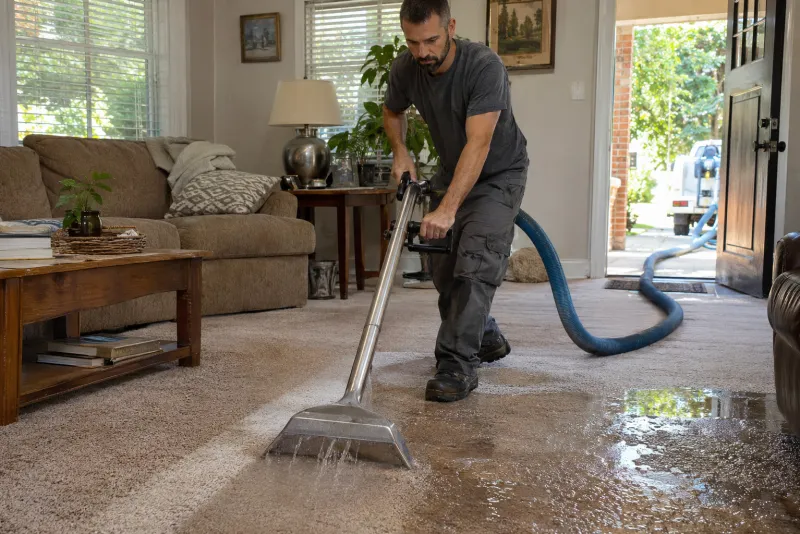
Emergency Water Extraction
Standing water removed before it reaches drywall, baseboards and stored belongings.
Get help
Liberty Hill's original town, acreage properties and fast-growing subdivisions all face water risk from plumbing, weather and uneven terrain.
Call (512) 555-0143 Or see how to reach dispatch. Calls are answered 24/7.Liberty Hill sits west of Georgetown along State Highway 29, where the historic town meets new master-planned communities, ranch land and limestone hills. The community has expanded quickly, bringing newer slab homes with attic systems and second-floor plumbing alongside older properties with wells, septic equipment and longer runs of exposed pipe.
Rainfall moves fast across rocky terrain and along roadside ditches. A drainage failure at the uphill side of a lot can send water toward garages and exterior walls, especially where construction has changed a property's grade. In rural areas, a well-house line or outbuilding pipe may freeze or fail without being noticed immediately.
New construction does not eliminate water risk. Appliance hoses, loose fittings, water heaters and attic condensate lines are frequent interior sources. Hail and strong wind can damage roof coverings over large subdivisions, and the February 2021 freeze remains a reminder to inspect exposed plumbing after a hard cold event.
The first question is whether water came from inside the plumbing system or followed the ground toward the structure.
Rocky ground sheds water rather than absorbing it. Downspouts, swales and driveway grades must keep heavy rain away from low walls and garage entries.
A failed washing-machine hose, refrigerator line or under-sink connection can affect finished cabinetry and flooring quickly, even in recently built homes.
Wells, pressure tanks and long exterior supply runs add failure points outside town. A broken line can run for hours before the property owner sees the result indoors.
Hail can open a roof to rain, and freezes can split pipes in attics, exterior walls and well houses. Drying begins after the active source is safely stopped.
Tell dispatch whether the property uses a well or septic system and whether water entered from the ground, roof or a fixture.
The same crew handles extraction, drying, contamination cleanup and the repair.
Standing water removed before it reaches drywall, baseboards and stored belongings.
Get help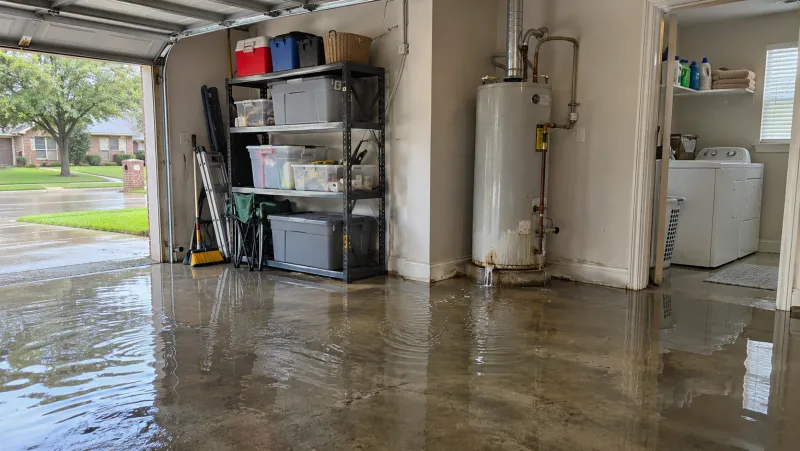
Leaks below the slab, wet wall bottoms and runoff collecting near a foundation.
Get help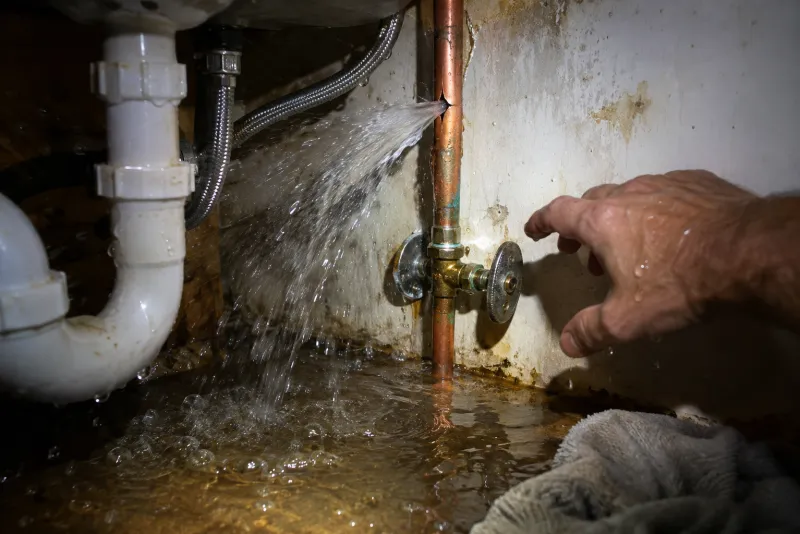
Freeze-damaged pipes, attic line breaks and ceiling stains traced to the source.
Get help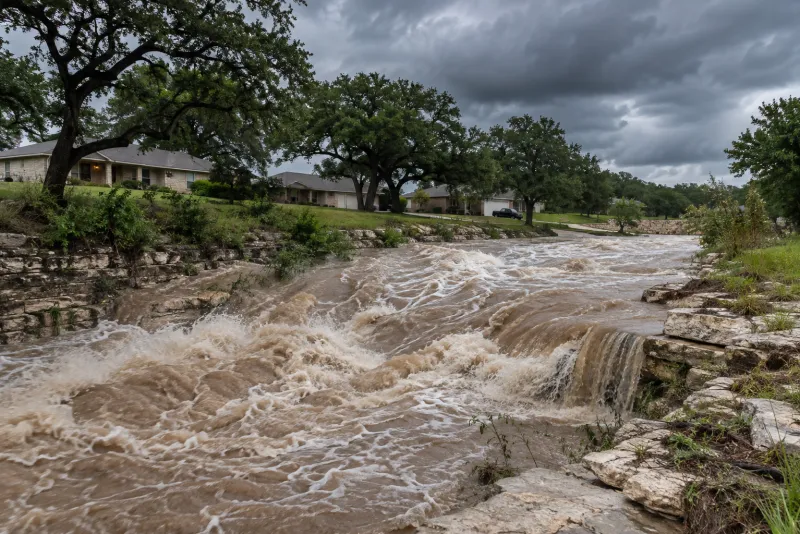
Wind-driven rain, hail-damaged roofs and ceiling leaks after a Hill Country storm.
Get help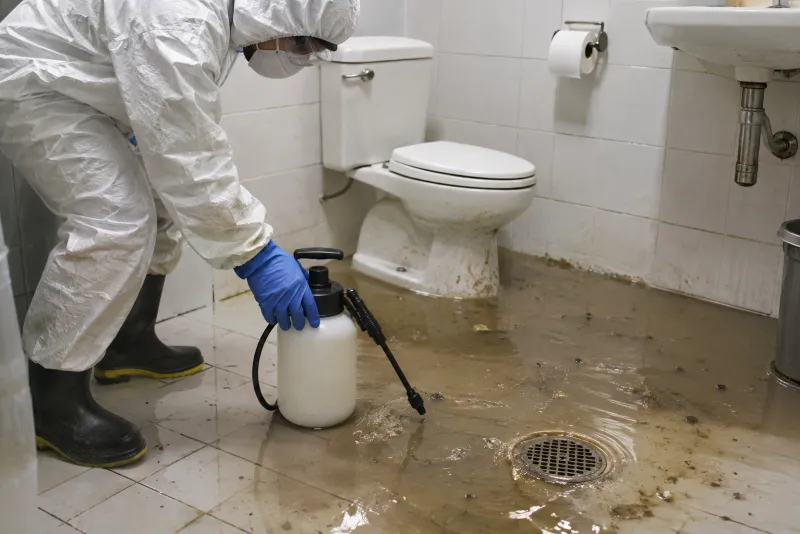
Contaminated water handled with containment, PPE and appropriate disinfection.
Get help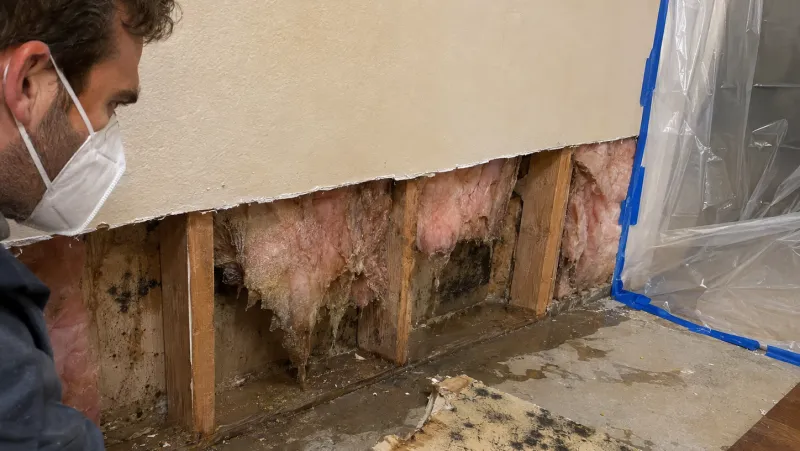
Containment, HEPA filtration and repairs after the structure is dry.
Get helpLocal knowledge matters when the housing stock changes block by block.
78642 · Original town homes and businesses. Older lines, roof leaks and mixed foundations.
78642 · Large newer community. Upstairs plumbing, appliance leaks and HOA access.
78642 · Newer homes west of town. Slab leaks, water heaters and roof drainage.
78642 · Established subdivision. Attic equipment and storm-related ceiling leaks.
78642 · Growing neighborhood. Supply-line failures and foundation drainage.
78642 · Acreage properties. Wells, septic systems, gates and exposed water lines.
These are the signs that usually justify a moisture inspection rather than a wait-and-see approach.
Send a photo or describe what changed. We will tell you whether it needs a visit today.
Call now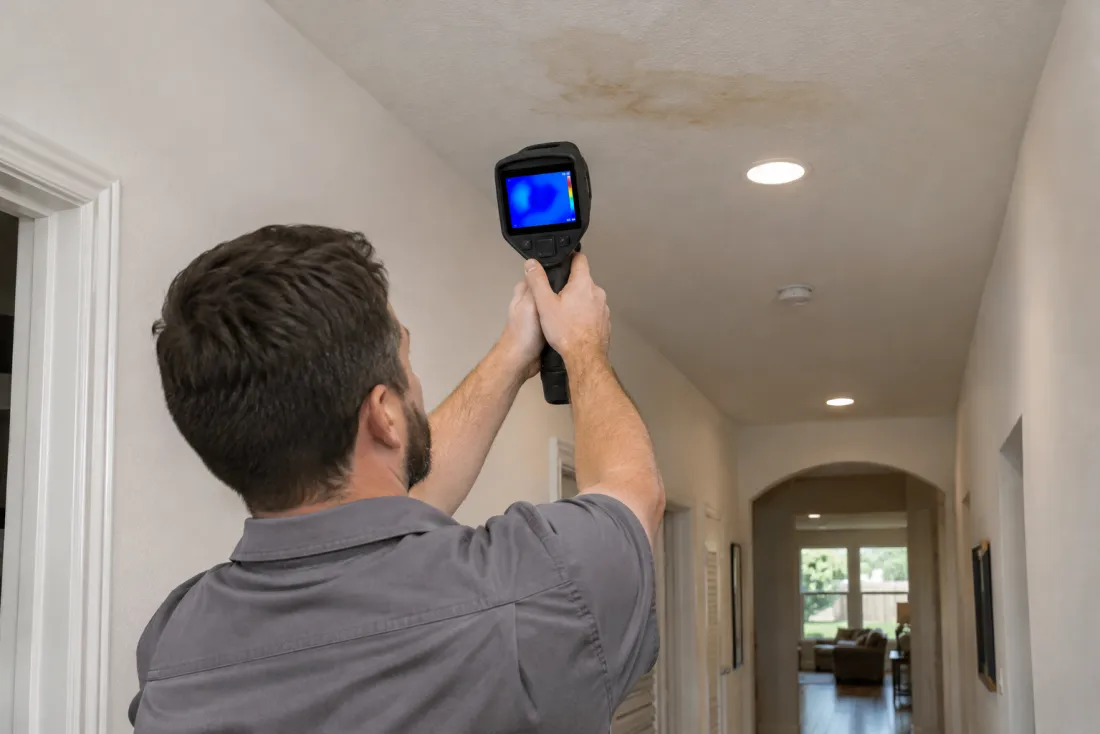
No mystery, no pressure. Here is the sequence from the first call to the final reading.
We confirm the address, the source and whether the water is contaminated. You get safety guidance before the crew leaves.
Moisture meters and thermal imaging map the affected area. We photograph materials and record readings.
Standing water is extracted. Saturated carpet, pad and material that cannot dry in place are removed and documented.
Equipment is sized to the space and checked daily. Drying continues until readings meet the dry standard.
Drywall, trim, flooring and paint are scoped after drying and insurance review.
We serve Liberty Hill along SH 29, from Old Town and new communities to rural homes west of the city limits.
Rural calls may involve gates, long drives or unpaved access. Provide directions and gate details before the crew heads out.
Use the map link for the general area. For a crew response, call and give the exact address, gate code and any access notes.
Open area mapLocal answers, not a national script.
Yes. We handle extraction and drying inside the structure. A qualified well or septic contractor repairs those systems, while we document the related water damage.
Yes. We remove standing water and inspect the adjoining house, walls and flooring. The outside drainage path should be corrected so the same area is not exposed again.
Stop the source if safe, protect valuables and call. We document conditions and dry affected materials so you can work with the builder, plumber or insurer.
We assess and dry the interior damage after a roofing professional addresses the opening. Moisture readings confirm whether insulation and ceiling materials can remain.
Request service
Call for active water, estimates, scheduling and questions. If water is near outlets, a panel or a gas appliance, leave the area and call from a safe place.
One call gets you shutoff guidance, an arrival window and a plan for Liberty Hill. Have your address and any insurance claim number ready.
Call (512) 555-0143Tap to call from your phone.
Call now. We will tell you what to shut off, what to move and what to leave alone until the crew arrives.
Call (512) 555-0143